
This special issue draws on a selection of papers given at two international symposia organized in the context of ERC MUTE – Soundscapes of Trauma: Music, Sound, and the Ethic of Witnessing (Horizon 2020).1 The first one, ‘Listening as Witnessing’ took place in Athens from 16 to 19 October 2023 and was co-organized by the Institute of Historical Research of the National Hellenic Research Foundation, The Listening Academy, and the Athens School of Fine Arts. The second symposium, ‘Ear Witness: Listening to Violence, Migration, Climate’ was co-organized by the Institute of Historical Research of the National Hellenic Research Foundation and the University of Art and Design (HEAD - Genève, Haute école d'art et de design, Hes-so). It took place in Geneva from 25 to 26 February.
The interdisciplinarity of these encounters reflects the sonic turn that has been taking place in the humanities and social sciences: a paradigm shift that has brought to the fore the social, cultural, and political ramifications of sound and the importance of listening practices in understanding the world. Posing new questions and shedding light onto perspectives previously ignored or silenced, has allowed scholars, researchers, and artists to challenge and transgress the boundaries of national archives and archives of violence. Understanding the multifaceted role of sound in political and historical traumas, as well as its inaudibility and absence in discussions about violence and resistance is to perceive a missing and crucial part of the puzzle that allows us to critically approach and listen to the past and present with different ears.
Inaugurating the journal Witnessing, this issue shares the notion of witnessing as a process that ‘cannot be fully grasped by one discipline single-handedly but requires the methodological tools and practices of many’ (See About). The articles, essays, and audio essays explore – critically and multimodally – listening as a process of witnessing with regard to traumatic, invisible or inaudible sounds, voices, (hi)stories. How is trauma acoustically represented? What does it take to make an absent sound or voice heard? What is the ethical and political positionality of listening as witnessing? And what of the unlistenable, when it becomes difficult to listen further? What kind of response and responsibilities does listening-witnessing call for? Can mutualities and networks of care develop through practices of listening in such contexts? Can listening become the point where different struggles meet? What are the intersections of listening-witnessing and art practices? An encounter of scholars, artists, and researchers, this issue aims at collaborative dialogue. Contributing to new perspectives on listening as witnessing, it hopes to initiate a redistribution of the heard. Published in a politically bleak moment in time, when human rights once taken for granted are consistently undone, far-right ideologies, racism, nationalism, and violence are spiralling out of control against a wide range of Others, while environmental crises, war, and genocide are raging, we wish to open up a dialogue with engaged communities of peers.
Brandon LaBelle reflects upon how we can witness the missing and the disappeared, highlighting how such traumatic absences call for a form of ‘negative listening’ so as to hear otherwise. Exploring two radio programs in post-1974 Cyprus that transgressed the impenetrable limit of Green Line separating the island, Anna Papaeti shows how listening can be a potentially transformative process in situations of (post) conflict, and the radio waves a potently dynamic transformative space, an acoustic territory that can disturb the political economy of who can talk and who can be heard. Gene Ray’s article conceptualizes the notion of ‘late listening’, a mode of sonic witnessing and critical reflection responsive to the current planetary polycrisis of socio-ecological turmoil, drawing on work from trauma studies and critical theory elaborating a ‘crisis of witnessing’ after Auschwitz. Based on research with migrant women in Athens, Nelli Kambouri shows how a politics of translation enables forms of listening and witnessing that bring to the forefront migrant women’s sonic agencies, considering how making heard and listening to the buzzing of translation can produce enactments of citizenship. Dana Papachristou and Yorgos Samantas’ article explores the dynamic encounters with Deaf and hard-of-hearing students within a socially engaged sound-and-radio art project. Critically rethinking the relational aspects of sound and hearing, they emphasize the tensions between the senses and identity. Leandros Kyriakopoulos examines the emergence of the unsound as a techno-scientific and political object, focusing on frequencies beyond the audible spectrum and their effects on the body, perception, and strategies of power, highlighting a dangerous expansion of what counts as ‘sound’ and ‘listening’ in contemporary techno-military realities.
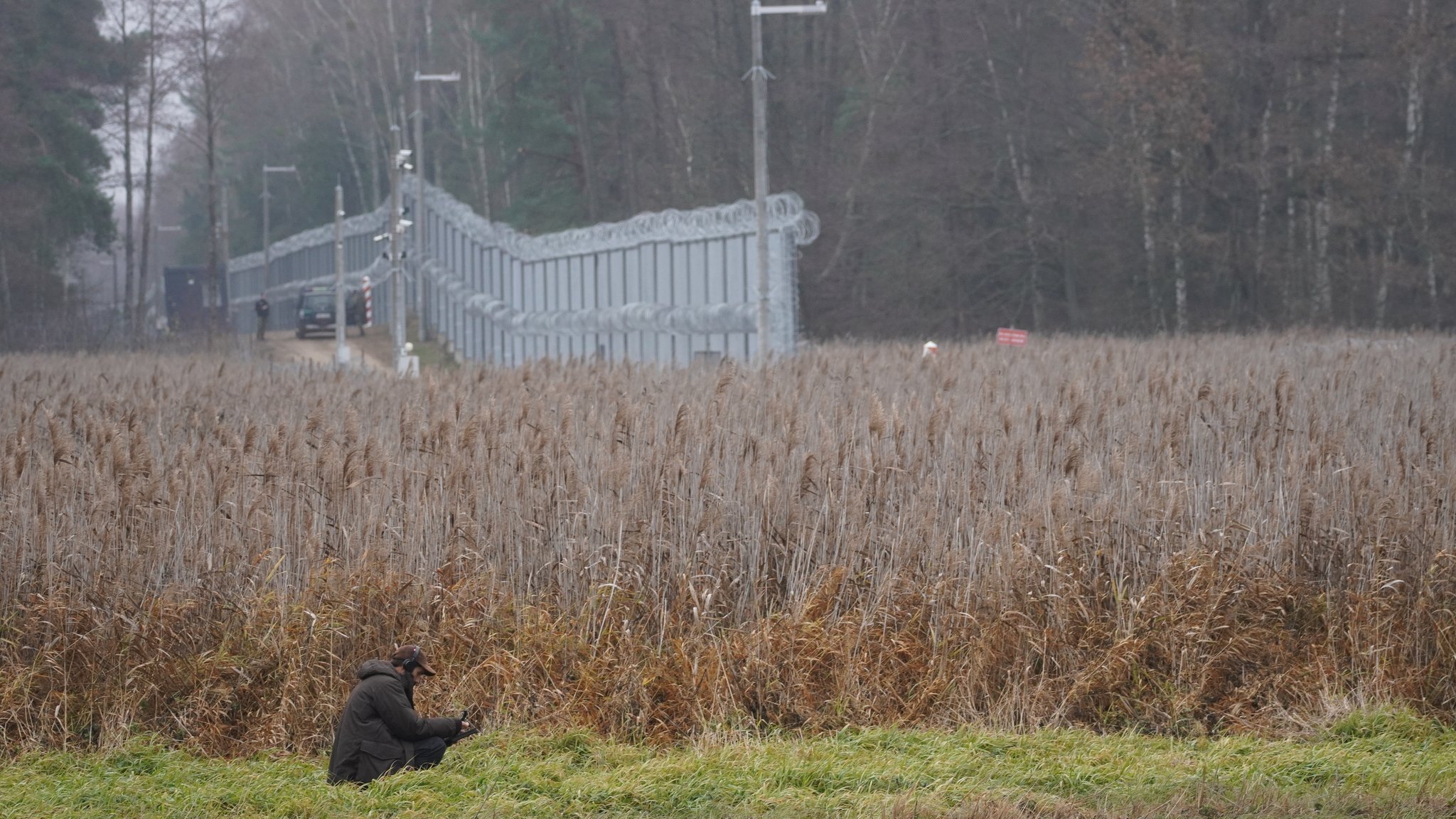
In addition, Eva Matsigkou reflects upon a series of workshops held at the Melissa Network of Migrant Women, a community space in Athens, which brought focus to sound and music, and upon how a ‘slowed-down’ form of listening can better enable critical opportunities for attending to difficult stories. Considering the importance of stories as carriers of social and political meaning, Stefanos Levidis calls for a shift of attention toward human and non-human assemblages, demonstrating how sound and sonic methodologies can allow for broader understandings of border frontiers as liminal sites where state policies, technology, and species entangle.
As part of Witnessing as Listening, two reflective audio essays are included. Drawing upon questions of positionality, Lefteris Krysalis critically unpacks ways of listening at the border, capturing how silence emerges as a complex acoustic marker of refusal as well as repression. acte vide, a duo project of Danae Stefanou and Ioannis Kotsonis, presents a meditative performance work or sonic fiction that wanders eerily through human-technical encounters that destabilize notions of auditory truth, suggesting alternative paths for a listening positionality.