Back to School
It is the month of October 2022, and we – a musical pedagogue/media theorist and an anthropologist engaged in sound – are standing in the theatre lobby of the High School for the Deaf and hard of hearing1 where we came to work on a new project. The room is full of 35 pupils aged from 11 to 17, along with teachers of various specialisations. At the centre stands a fine billiards table, a wooden foosball table that occupies the entire corner. Alongside the wall, glass vitrines display traditional Greek costumes donated by local businesses and neighbouring cultural associations. To our eyes, these elements together form a somewhat inconsistent setting for an educational facility. Yet perhaps we, too, are part of this blend of diverse modes, motives, as well as stances that mirror the different models of disability.
The activities discussed in this paper were part of Audibility, a project developed within the framework of B-AIR: Art Infinity Radio – Creating Sound Art for Babies, Toddlers, and Vulnerable Groups: a cultural cooperation initiative co-funded by the Creative Europe Programme of the European Union (2021–2023). Audibility was the name of our contribution to the larger Creative Europe program. It was conceived and produced by TWIXTlab, an institution operating at the intersection of art, anthropology, and the everyday life. The broader European project, B-AIR, was coordinated by RTV Slovenia and included partner contributions from BAZAART (Serbia), the Grenoble School of Architecture and CRESSON (France), the Jožef Stefan Institute (Slovenia), RadioTeatar (Croatia), RTS Serbian Public Radio and Television, Burch International University (Bosnia and Herzegovina), the University of Eastern Finland, and TWIXTlab (Greece).2
For our work within the B-AIR Creative Europe programme, we adopted the social model of disability, understanding disability as a condition shaped by social, cultural, and environmental contexts, that can be transformed through inclusive artistic and educational practices, among others. Briefly on the discussion on disability models: Soula Marinoudi (2024, pp. 19–25) traces the evolution from stigmatizing, disciplinary, and canonistic frameworks – the moral and medical models – to emancipatory ones that foreground social, cultural, and relational understandings of disability. The moral model views disability as divine punishment tied to guilt and shame, while the medical model treats it as an individual defect or personal tragedy, reinforcing paternalism and dependence on experts. In contrast, the social model, emerging in 1970s Britain, reframed disability as a form of social oppression rooted in structural barriers and capitalist production. The minority model in North America emphasized disability pride and community identity, influenced by civil rights and queer movements. The Scandinavian relational model focused on the interaction between individual and environment, advocating strong welfare systems and inclusion. Finally, the cultural model, informed by feminist, queer, and postcolonial theory, examined disability as a cultural construction and form of representation in art and media, promoting disability arts as resistance to ableism. Marinoudi (ibid.) also highlights the growing contribution of anthropology to Disability studies, emphasizing its role in contextualizing disability as a form of cultural difference and lived experience. These distinct models are often overlapping or appear contradictory, in both comprehending the experience and informing policymaking (Friedner and Kusters, 2020, pp. 31–47).
Between 2021 and 2023, within the framework of B-AIR, we conducted a series of four recurring workshops, three of which took place at the aforementioned Special School for Deaf and hard of hearing students in Athens. Throughout the workshops, we covered topics such as composing sound pieces based on the vibration of material, physics, and DIY instruments, spectrograms, waveforms, Chladni plates, laser visualisations, radio art, and narrative-making, among others. Each session was built on the last one, enabling pupils to revisit and deepen their engagement through recurring meetings of similar topics and engagement with sound. The series culminated in a final workshop held at the Greek National Opera. For this event, we also invited adults and the wider public, creating a ‘relaxed performance’3 in which a d/Deaf and hard of hearing orchestra performed live in the foyer. By ‘relaxed performance’ we mean a format designed to invite everyone – young children, adults, people on the autism spectrum or with other forms of neurodivergence – to the event through a welcoming, flexible, non-stressful environment. Lighting was gentle, the pace was moderated, visual supports were present, and sensory translation was foregrounded so that inclusion was achievable across modes of perception. The relaxed performance thus became a space where diverse sensory and cognitive profiles were respected and welcomed.
We opted for sensory translation as a deliberate strategy. We are aware that schools for the Deaf and hard of hearing in Greece rarely include active musical programmes or dedicated musicians in their staff. The most common institutional assumption is that the pupils would not benefit from music education. Yet there is empirical evidence to the contrary: research shows that music lessons in d/Deaf and hard of hearing children improve auditory perception, working memory, and phonetic discrimination (Fawkes, 2006). This provided the rationale for our decision to invest in multisensory approaches to sound, not as an educational add-on but as integral to inclusion and participation. We also acknowledge that Deaf and hard of hearing students in Greece may attend either mainstream/general schools or Special Schools according to parental choice; and that most pupils whose parents opt for a Special School do so in part because of the priority given to the use of sign language and cultural belonging. Our workshops were situated in a Special School, thus aligned with the students’ communicative environment. However, our approach sought to bridge sign culture, sound culture, sound art, and inclusive pedagogy, rather than presume a deficit or hearing-normative framework.
The student group we worked with was richly diverse: Deaf students affiliated with the wider Deaf community in Greece, deaf students who did not necessarily identify with that community, hard of hearing students with or without additional disabilities, cochlear-implant users who identify as members of the Deaf community, hearing-aid users, and also pupils from many ethnic and class backgrounds (for example refugees unfamiliar with Greek Sign Language, d/Deaf Roma pupils who may or may not identify with the Deaf community and lack access to hearing aids, Deaf Ukrainian war refugees temporarily in Greece, among other cases). Because our programme did not seek to impose a pre-set educational agenda, most decisions on sensory translation emerged organically through pupil interest and participation. We were thus able to monitor which modes of translation the pupils engaged with more deeply, for example: visual translations (spectrograms, waveform editors, colour-sound relations), tactile translations (vibrating plates and materials, transducers and bass speakers), auditory translations (selecting frequencies heard by specific individuals rather than frequencies not heard), and other modalities, drawing upon emerging technologies (haptics and vibrotactility), as well as more traditional ones (such as waveform and spectrogram visualisation).
Due to our own engagement with music and sound, we were familiar with all the above practices and methodologies. Though we did not use smell or taste as a translation sense, we recognise it could be a fascinating follow-up. Our starting point was the conviction (informed by our work as sound researchers and artists) that sound is experienced through all the senses, a notion that is relevant in disability contexts as much as in any other educational setting. We approached sound without therapeutic intention and without presuming that d/Deaf or hard-of-hearing children should hear ‘better’ or perceive sound through the ear alone. Denying the ear-centric axiom, we embraced vibration, imitation, collective sensing, imagination, and even the possibility of not hearing at all, treating sound as the movement of particles across air, bodies, water, and solids. This orientation enabled us – as sound artists experimenting beyond the cochlear – to meet the pupils on equal ground and to co-create new ways of engaging with sound.
The project name Audibility was chosen as a title that purposefully emphasized the ability to be heard, transposing visibility – a key goal within identity and diversity politics – into the field of sonic media, with full consideration of the politics of hearing, tactics of silence, and the broader frameworks shaping Deaf identity. We, the authors, as workshop facilitators and as participant-observers, explored methods of using art as an instrument for qualitative research, probing whether artistic media, processes, and outcomes can function as research tools. Further, we considered the role of artworks and their showcasing to broader publics, exploring how sound art as an artistic field could also benefit from those alternative ways of engaging with sound. In this paper, we navigate through various instances from a two-year engagement with our teenage workshop participants and with sonic arts media, while critically reflecting on our own positionality as members of the hearing majority. Deriving from sound studies, our main concern was not to shift the field of disability and deaf studies, but rather to explore the possibilities and limits of convergence of all those fields through art and education.
More specifically, Audibility unfolded through a series of workshops at the Special School for the Deaf and hard of hearing, each series consisting of four meetings of approximately one and a half hours each. Three of these series were held at the school, while a fourth one and longer – comprising twelve two-hour meetings – was addressed to young adults in the context of the educational program of the Greek National Opera. Each series at the school featured invited artists who presented their work and, in turn, invited pupils to participate in creative workshops that led to the realization of an artwork with their collaboration. One series was led by visual artist and art pedagogue Tatiana Remoundou. Engaged with sound as a hard of hearing person, Remoundou works primarily with video and sound on the topic of disability, inclusion, and exclusion. The next series was led by Lambros Pigounis, a hearing musician and sound artist who treats sound as a physical phenomenon, focusing on tactility, vibration, and visual renderings of sonic signals. The third in-school series, to which we will refer more extensively in this article, was led by a group of radio and music producers and designers, dealing with radio as a narrative, technological, and artistic medium. Held at the Greek National Opera, the fourth one was facilitated by us authors and composer Orestis Karamanlis, leading to a musical performance of both hearing and deaf performers.
Within these workshops, we sought to emphasize participation in a variety of ways and at different levels. Among other activities, participants were invited to assess sounds and musical samples, test vibrotactile stimuli using specialized technical equipment (such as transducers and Chladni’s plates), and create their own musical beats with open-source software. They were encouraged to take the stage at an open microphone and observe how their voice, breath, and clapping translated into visual spectrograms; to paint their impressions of a musical piece in watercolours on canvas; and, finally, to create a narrative story that was transmitted through a prototype vibrotactile radio, inspired by Helen Keller’s historic and iconic account on Beethoven’s Symphony no.9.4 In parallel, we engaged with teachers from related fields (language, physics, physical education) to ensure that the project was suitable for and that it fit within the school environment – respecting both time constraints and educational frameworks – while creating experiential links across formally distinct areas of knowledge.
The participatory nature of the project was crucial, aiming to include d/Deaf and hard of hearing pupils and adults, not as end-users of an accessible learning curriculum, but rather as interlocutors for its formation. Deaf and hard of hearing pupils in Greece do not typically engage with music (or with sound as an artistic medium) within the school curriculum – an educational gap that, to our knowledge, applies to all Schools for the Deaf and hard of hearing in the country. In our view, this institutional lack is not only an expression of the persistent misunderstanding of the hearing majority that Deaf people have no relation with music and sound whatsoever, a misconception countered by a growing body of literature (for instance, Holmes, 2017; Maler, 2013, 2022; Straus, 2011; DiBernardo Jones, 2016) and by our own experience. It also creates a feedback loop mechanism which perpetuates exclusion on multiple levels: from formal musical education to the development of Deaf sonic creativity and talent, thereby reaffirming the initial false claim.
Audibility was not solely about collaboratively creating artistic sound pieces, but more broadly about proposing a learning environment where pupils could engage with sound in ways that traditional curricula often overlook. Sound art, as a field that exceeds the constraints of typical music education and music as an art form at large, is underrepresented even in conventional (hearing) schools as well. It is those non-cochlear aspects of sonic arts, to borrow Kim-Cohen’s phrase (2009), that raise questions on the conceptual and critical, material and technological, phenomenological and ontological connotations of sound and its perception. These, in turn, can inform more inclusive approaches to music and art-making, resonating with relative literature on the ways of the Deaf with music and sound (Straus, 2011; Helmreich, 2018; Friedner and Helmreich, 2012; Panopoulos, 2021). In this regard, we posed questions to our participants, either directly or through workshop props, in order to explore listening with the body, skin, and eyes, moving beyond the ear, so as to negotiate and understand their diverse auditory experiences.
So, back to school: in this first of many meetings, Dana is presenting our initial speculative sketches for an introduction to sound art for Deaf and hard of hearing pupils – an attempt to make sonic creativity relevant to the experiences of pupils who are otherwise excluded from this field. It is a moment when COVID restrictions have slightly loosened, allowing outsiders to visit the school. Everyone is wearing medical masks except for the headmaster, who keeps his face uncovered in order to accommodate the diverse communication modalities of all pupils (such as lip-reading or rephrasing in spoken language), alongside his interpretation in Greek Sign Language. He is standing next to Dana, who is narrating our artistic references. Broad as they are, they span from Susan Dupor’s, Betty Miller’s and Ann Silver’s visual artworks, pinpointing the Sign Language ban as a source of collective trauma, to the De’Vies Deaf art emancipation movement; to Gallaudet University’s triumphant achievements within Deaf global history5 to Ludwig Van Beethoven, Evelyn Glennie, and Christine Sun Kim – three famous instances in music and art that, in one way or another, relate to deaf experiences with non-aural, multisensory engagement with sound (Straus, 2011; Wallace, 2018; Holmes, 2017). She concludes with Greek artists Tatiana Remoundou and Lambros Pigounis and their approaches to Deaf and hearing negotiations around music, sound, and voicing, through vision, lip-reading, and vibrotactility.
As it becomes apparent from the aforementioned themes, we touched upon the history of the manualist-oralist trauma and the Civil Rights movement, though not in a didactic way, given the young age of the pupils. Having studied at Gallaudet University and being a CODA herself (i.e. hearing child of Deaf adults), our community liaison Ourania Anastasiadou, whose work focuses on that period, brought valuable insights. Tailored for the purposes of the workshops, this Deaf Art genealogy relied on previous work by anthropologist Panayotis Panopoulos (2016, 2021), as well as curator and visual artist Anastasiadou, who were also associated with the project as scientific advisers. Moreover, our first meeting coincided with Deaf Mentors’ Day, organized by the Greek Deaf Association, where these themes were central to the presentations and discussions that followed.
More specifically, in our initial approach to Audibility, we talked about the broader history of the Civil Rights movement and its profound influence on disability activism and Deaf culture. The Civil Rights movement of the 1950s and 60s, led by African American communities in the USA, became a paradigm for later struggles for equality, accessibility, and recognition across many marginalized groups. Its legacy shaped the Disability Rights movement that gained force in the 1970s and 80s, culminating in landmark frameworks such as the Americans with Disabilities Act (1990)6 in the USA and, internationally, the United Nations Convention on the Rights of Persons with Disabilities (2006; Gertz and Bourdreault, 2016). Within this continuum, Deaf activism drew crucial inspiration from civil rights principles – especially the demand for linguistic and cultural recognition, self-determination, and participation in all aspects of social life (Christiansen and Barnhartt, 1995; Padden and Humphries, 2005). Furthermore, we took into consideration the friction between the oralist and manualist approaches to Deaf education, which left a legacy of collective trauma within Deaf communities. Marked by the suppression of Sign Language and the privileging of spoken speech and lip-reading (MacIntyre, 2018, p. 170), the dominance of oralism fostered environments in which children were punished for using their visual-manual language. They were denied access to Sign Language, and subsequently were banned from participating to a unique Deaf cultural identity.
On that first day described above, we were there to talk about sound art and music, but also to learn from our Deaf interlocutors about the diverse ways of ‘what listening is all about’. In terms of those two learning domains – of us as researchers and of our participants as pupils – the project unravelled in two intertwined fields of knowledge and practice, namely ethnographic observation and artistic pedagogy in music education and sound art. During this first school presentation, the large audience was silent. Evoking our experience from conventional schools, this is how a focused learning session would have sounded like. However, suddenly the headmaster disrupted his interpretation and burst into yelling, moving towards the back rows, to a group of kids sitting in the far corner behind the pool table: ‘Look at me! You should follow what these people are saying! They are saying these things for you! These are very important topics! They will come again, and you will have to respond to what they are saying!’
The headmaster’s call to order was the first shock during our encounter with the Deaf educational setting. Despite our extensive readings on the different models of disability, the tensions between oralist and manualist traditions in Deaf education and culture(s), and the genealogy of Deaf art, the school – as a field experience – offered a flesh-and-bone understanding of ‘what it means to see, hear, listen, communicate, and inhabit the world through differential sensory configurations’ (Friedner and Kusters, 2020, p. 32). Albeit addressed to the pupils, the yell also breached some light on our own reconnaissance of a Deaf space and its making through (what we thought of as) silence.
As members of the hearing majority, and perhaps of some sort of a ‘hearing elite’ trained in musical performance and composition, attentive listening, and social enquiry through and about the sonic, we should have also re-calibrated our senses to the aural-to-visual sensibilities that entail Deaf culture at large, and the particular Deaf classroom as its microcosm; that is, as one of its unique manifestations, as a context for its reproduction, becoming, consolidation, and construction. Listening in this context means to keep one’s eyes open at all times – an understanding that undermined our long-standing habitus, pervasive across a range of other listening practices, of closing one’s eyes to focus on the aural stimuli. In turn, it unsettled any metaphysical or otherwise symbolic attribution of acousmatic experience, in favour of a highlighted aspect of voicing as bodily performance.
Coming from all these privileged positions, with a background in sound studies, acoustic ecology, anthropology of sound, sonic ethnography, music, and sound art, we previously engaged in projects involving listening, composing, and walking art, including recording and creating soundscape compositions and geo-located audiowalks. Moreover, with our artistic group Akoo.o (see Akoo-o, 2016), we have facilitated workshops for creative experimentation with these tools across diverse groups and educational settings. In Audibility, we experimentally adapted these approaches for our research, adjusting to the particularities of the field. Yet, as mentioned above, we found ourselves compelled to listen carefully, read lips, decipher signs and letters, and above all to live in a world where our specialization was of no use, especially for the difficult audience in the back rows.
With the use of the term back rows, we refer to the imaginary body of undisciplined, non-conforming, or mischievous pupils who find refuge to the back rows of the classroom, asserting a claim to privacy from the teacher’s eye. Us, the authors, were once part of those kids, non-conforming due to our rebellious teenage spirit that collided with the discipline of school settings. In this context, though, the spatially arranged resistance to the teacher’s authority did not apply. Built in the 1990s, this particular school for the Deaf and hard of hearing featured circular classrooms by design, allowing clear vision of the board and equal participation opportunity for all. Interestingly, although this spatial paradigm has been proposed by various pedagogues and policymakers for conventional schools as well, it has never been standardized as a good practice, at least not in Greece.
In Greek, the verb ‘ακούω’ (akúo or akoo.o) does not distinguish between ‘to hear’ and ‘to listen’. Although there are a few words that refer specifically to listening as attentive hearing, they tend to be rather scholarly and context-bound jargon (like afougrázomai / to listen attentively or akroázomai / the medical procedure of auscultation). In everyday use, akúο refers both to the ear’s capacity to capture auditory stimuli processed by the brain, and to the act of following and comprehending. As Panayotis Panopoulos points out, in Greek ‘to hear’ or ‘to listen’ (signified by the same verb) also means to conform to social norm, family lineage, and canon. As he sums up relative literature, ‘[…] in different cultures the sense of hearing is symbolically related to proper behaviour. “To hear” stands for “to understand”, “to act properly”, “to obey”. Humans who “do not hear” are put on the boundaries of, or even outside, culture or society’ (Classen, 1991; Reichel-Dolmatoff, 1971, in Panopoulos, 2003, p. 641). In this regard, the back rows of the Deaf classroom were, in a sense, doubly excluded from this widely understood norm. They were positioned in the margins of both the physicalized barriers of an oralist-centred (and thus audist) world, and of the pedagogical norm. Had they conformed to it, they would have been classified as ‘good’ pupils. In line with this pedagogical assessment, this group of pupils was referred to as ‘the difficult kids’. Interestingly enough, it was these ‘difficult kids’ that accompanied us in all the workshops we conducted during the three semesters we spent at the school.
Led by sound and visual artist Tatiana Remoundou, this first introductory meeting in the school signalled the beginning of the project and of the first workshop. Remoundou’s idea was to collectively compose with the pupils a sound piece that would consist only of sound frequencies registered on individual audiograms of the specific group of participants. As the first visiting artist in the workshop series, Remoundou sought to be as inclusive as possible. Her work was easily understood by both the school management and most pupils as having an exemplary pedagogical approach, being a successful Deaf art-and-pedagogy professional herself. In the end, Remoundou designed a participatory multi-sensory installation inclusive to all. Even so, telling were the words of one of the back rows kids, which we managed to decipher from the videos recorded for documentation purposes: ‘well this is not for us (Deaf), it seems it’s more for the hard of hearing’.
This remark called for a critical reflection of our approach and its function within the wider educational system. Our understanding of what our two participants were signing can be interpreted in multiple ways. This was expressed during a gamified audiogram, where pupils were asked to move if they heard the frequency being played. Wishing to avoid medicalizing participants, we opted for this solution even though Remoundou had suggested to conduct actual audiograms. The fact that not all frequencies were perceived by everyone created, for some, the sense that this activity was not intended for them, especially since all of them were standing and moving freely within the space.
Eventually the activity engaged all participants: by using the full range of frequencies, some frequencies were heard or felt by everyone. Still, despite all our hard efforts to create an inclusive environment, we found the pupils’ discomfort troubling. What struck us the most was the following: when not all frequencies could be heard by everyone, the pupils automatically focused on their lack (the frequencies not heard, the moments of stillness, rather than on the ones they did hear and the moments of movement), even though theoretically it should have been fine within such an educational context and a gamified workshop among peers. We encouraged everyone to be patient. We explained that this particular workshop aimed to identify the material we would work with in the following sessions, during which the composition phase would take place, creating a sound piece based on their ‘personal frequencies’. Indeed, the next phase worked well, and pupils took great pride in their musical piece. We remained reflective about the crack between our educational plan and the above-mentioned reaction. This has been an important instance for us. It compelled us to explore sensory translations and other modalities, managing to demonstrate that music and composition could, in fact, concern everyone involved.
Divergences and Intersections
Within Disability studies, there are numerous issues of identity and diversity, and there is a notable divergence between various disability categories and Deaf identity. Depending on different contexts, Deaf individuals and communities might either embrace or reject inclusion in the disability category (Harvey, 2008, pp. 42–57), instead defining themselves through the use of Sign Languages as a linguistic and cultural group. As previously discussed, various interpretive frameworks and models exist for understanding and defining disability including medical, social, minority, relational, and cultural models, among others (Marinoudi, 2024, pp. 19–23). In our work with this particular school, we were constantly attentive to the ways in which d/Deaf and disability identities intersected and diverged. Most of the pupils identified with Deaf culture, learning the Greek Sign Language and valuing the community it connects them to. Others experienced their hearing difference primarily as a disability, shaped by social barriers. Some navigate both perspectives simultaneously, recognizing the social challenges of hearing difference while embracing a sense of pride and belonging within the Deaf community. Understanding these dynamics was crucial for our workshops: it meant designing activities that were flexible enough to honour linguistic and cultural identity, while also providing strategies and tools that addressed differences in hearing ability. By foregrounding participation, exploration, and sensory translation, we could support each pupil in negotiating their own relation to sound, vibration, and creative expression, without imposing a singular framing of their identity.
Combining Deaf Studies with our own field and artistic practice, namely sound studies and sound art, we encountered a landscape of divergences and intersections that reveal new ways of thinking, sensing, and creating through and beyond sound. While seemingly divergent, these two fields share significant commonalities, particularly in theoretical and artistic contexts. Michele Friedner and Stefan Helmreich’s work (2012, pp. 72–86) highlights these intersections, illustrating possible convergence through examples from art and research projects that explore the shared elements of music and sound art. This engagement underscores the potential for an enriched dialogue between the aural environments of sound art and ‘people of the eye’ (a phrase attributed to George Veditz, seventh President of the National Association of the Deaf from 1904 to 1910, cited in Friedner and Helmreich, 2012, p. 73). The distinct frequencies that traverse the line between audibility and vibrotactility present a compelling field of interaction for d/Deaf, hard of hearing, and hearing individuals alike.
Another crucial point of intersection is the voice. Beyond established Sign Languages, Deaf voice represents a unique acoustic and linguistic space. Deaf voice, shaped without auditory feedback (Wirz, 1991, pp. 283–303), is unique to each individual and can be developed further through various techniques and logotherapy, courses which many of our participants were taking. Metaphorically, the voice is rich in symbolizing social presence and empowerment (Johnson and Kennedy, 2020, pp. 161–165), carrying profound political significance for the inclusion of d/Deaf and hard of hearing individuals in the public sphere (Lawy, 2017, 192–215). The Deaf voice serves as an additional communicative exchange between the Deaf community and the hearing majority, while enhancing the diversity of oral expression. While we acknowledge that, in the history of oralism and Deaf identity, voice ‘is not an instrument of liberation; instead, it is one of erasure’ (Meizel, 2020; p. 92), in this particular workshop, which focused on radio and radio art, we engaged with the theories of our scientific adviser Panayotis Panopoulos, and his prior research on Deaf voice within the arts (Panopoulos, 2016, 2021). His insights provided a valuable framework for understanding Deaf voice as a carrier of identity, agency, and affect, that was suitable within this specific educational context. Our goal was to create a safe space for the pupils to craft and record their own stories, while challenging the entrenched notion that the Deaf voice – or any voice that exceeds normative expectations – should remain unheard. The focus was not on the Deaf voice per se, but on the collective fabrication of a storyline with the possibility to be narrated and felt through vibrotactility and sound. The process was open for the group of participants to decide upon and volunteer to narrate on the microphone, without us facilitators imposing any selection criteria on vocal performance.
In our opinion, the integration of sound art and sound in general into disability educational contexts has the potential to offer d/Deaf and hard of hearing pupils the means for personal and artistic expression. Activities involving sound, voice, recording, and radio narration can encourage collaborative creativity and supplementary skills, independent of the need for ‘proper’ auditory function. These artistic pursuits can challenge conventional perceptions, expanding educational opportunities for pupils in Schools for the Deaf and hard of hearing. This approach shifts the focus from impairment and lack to the exploration of a potential, both for the Deaf and hard of hearing education, but also for a predominately cochlear-centric field such as sound art, a practice that is already explored by many sound artists. To this end, both fields can benefit greatly; we enter this intersection on equal terms.
Despite historical exclusion from audio- and phono-centric fields like radio and music, past educational methods – such as those pioneered by William G. Fawkes (2006) at Mary Hare Grammar School – demonstrate the potential for musical engagement among Deaf and hard of hearing pupils. Our field experience with these educational processes highlighted that listening is intrinsically connected with other sensory modalities beyond hearing as a sense and the physiology of the ear. This perspective aligns with broader discussions in sound art, sound studies and the anthropology of the senses, which emphasize on the multisensory nature of human perception and critique the exclusive division of sensory perception into isolated and distinct categories.
Furthermore, the concept of ‘aural diversity’, introduced by Andrew Hugill and John L. Drever (2023), emphasizes the unique ways individuals perceive sound. Paralleling the notion of neurodiversity introduced by Judy Singer (2017), this idea highlights the varied sensory experiences influenced by individual physiology, cultural background, gender, class, and personal life stories (Milton, 2020, pp. 3–6). The Aural Diversity project in the UK, initiated in 2019, seeks to expand our understanding of auditory diversity beyond the normative ‘golden ear’ standard. By integrating their findings with sound art practices, Hugill and Drever challenge conventional hearing paradigms and promote a broader, more inclusive perspective on auditory experiences. It is worth mentioning that the Deaf community is not homogeneous, and there are as many audiograms as there are d/Deaf individuals. This diversity spans from Deaf individuals to fully hearing CODA (that is, children of Deaf adults), with all the categories in between being interconnected with or without the use of technology. It also entails a wide variety of strategies, tactics, personal preferences, economic affordances, and critical stances towards both wearable technologies (hearing aids and cochlear implants) and what could be conceived as an audist canonistic imposition.
Exploring aural diversity in music and sound art, and extending this exploration to radio and other sonic media, reveals alternative approaches to sensory experiences. Renowned deaf musician Dame Evelyn Glennie (1990) links hearing with other senses, advocating for new ways of interacting with sound. Deaf artist Christine Sun Kim (2015) examines sound’s impact on materials and individuals, using these insights in workshops that engage d/Deaf, hard of hearing, and hearing participants. Her work highlights the subjective nature of sensory perceptions and fosters an ongoing dialogue about artistic expression, exclusion, and inclusion. Moreover, the project ‘Other Abilities’ (see Other Abilities, 2023) curated by Eva Fotiadi and Adi Hollander, effectively bridges the concepts of vibrotactility, space, and disability. Artists David Bobier and Leslie Putnam, contributors to Audibility project as resident artists and facilitators, have explored sound, sculpture, deafness, and vibration in their work, employing vibratory technology in various performance contexts.
As authors of this article and researchers, venturing into this field wasn’t entirely new for us. Nonetheless, the experience prompted us to reconsider and reframe questions and thoughts we had previously contemplated upon. It was enlightening to see these ideas manifest in the field and to witness how they resurfaced during the workshops in different contexts. This ongoing engagement with the interplay between sound and deaf experiences continues to shape our understanding and inspire further exploration.
On the Planet
During our two years of work at the school, much changed in the way we viewed our field and, in turn, how those encountered in the field viewed us. Throughout the research we chose not to change schools, so that we could maintain continuity in the educational process and build upon the relationships we had established. By then, we were already familiar with the pupils, who were gradually transitioning from the feistiness of the back rows to adulthood, navigating the transformative years of adolescence with all its rapid changes and its search for personal and collective identity. Also, many of the people we encountered, employed at the school as teachers and staff, later became our collaborators in other projects, as well as friends. Having begun this article with our first day at the school, it now seems meaningful to turn to the final series of workshops conducted there, highlighting the results and aesthetic discussions they inspired.
In this final series of workshops, we visited the School for the Deaf and hard of hearing with a larger team of facilitators, composers, and architects for the realization of a workshop titled ‘Tangible Radio – Class on Air’. Our aim was to explore the relation between radio art, creativity, vibrotactility, and the deaf experience. This was inspired by the account of deafblind writer, political activist, and disability rights advocate Helen Keller about a radio broadcast of Beethoven’s Symphony no.9 in 1924 (see Keller, 1925; Fessenden, 2015). Specifically, in a letter addressed to the New York Symphony Orchestra, Keller details the strong impact of the live broadcast from Carnegie Hall, New York, when experienced at the other end, at her home, through the vibration of her radio speakers. Our workshops took place during autumn 2022. Its main aims were the design of a prototype vibratory radio device and a collaborative production of a radio show with Deaf pupils (workshop participants). We sought to establish a direct connection between sound art, the deaf experience, and radio art, employing vibrotactile technologies, exercises, and elements of gamification to ensure that the engagement with the radio emerged naturally within the educational process.
In this section we wish to share our thoughts about one participant in particular, Ibo, a Deaf Roma student who was approaching adulthood and had recently become a father; one could already observe the first signs of fatherly attitude in the way he dealt with his classmates. He warned them if they made a disturbance, scolded them, and generally tried to keep them in line. The pupils in the back row too were slowly entering adulthood, beginning to take on the role of protectors, being more mature and serious. Ibo proved to be a great help to facilitators in the gym (the space offered to us), amidst countless distractions for pupils, special education teachers, and interpreters and the school’s overall chaotic conditions. While exploring our thoughts about Ibo’s participation, we also wish to situate his story within the broader context of the workshop.
During the first workshop of the series, we demonstrated a sound piece as a prop to initiate discussion, to pose questions about our understanding of sound as vibrotactile stimulus, and to inspire further interaction and imagination. The three-minute sound piece was composed and played back through an early-stage prototype device, conveying vibration via transducers rather than the typical propagation of sound through the air. The piece comprised a series of sound samples we had identified as tactile through literary references, discussions with Deaf interlocutors, and our personal reflections on our own corporeal experiences (such as recordings of walking on gravel, breathing, a purring cat, a pneumatic drill performing construction work).
Concurrently, actress and radio educator Kalliopi Takaki facilitated the creation of a new narrative and a small sound piece, during which pupils described the sounds they would hear or things they would see in the park, drawing upon their everyday experiences or more imaginary encounters. Some of the sounds they identified were already present in the pilot narrative. Others, such as additional animal sounds, were perhaps inspired by the cat, a visit to the zoo, or a desire to sense the respective animal. The story followed a simple narrative of a walk in the park, in which pupils would traverse the space until they found an object of their choice. This object was a spaceship, so the sound piece concluded with an imaginative twist, a rocket launch ‘from the centre of the park to a planet where only the Deaf can feel sound’, as we framed in our invitation to what would come next.
During the second workshop, also facilitated by Takaki, we began creating a new story, starting from the spaceship and leading to the Deaf Planet. Takaki orchestrated a session in which the pupils identified the sounds they would hear, see, or feel on the planet. The pupils recorded their notes as text or drawings on coloured pieces of paper, creating an archive. Based on this archive, we then selected sound samples and played them through transducer-speakers (that is, devices that propagate sound through vibration in solids, rather than through conventional air-propagating speakers). Together with the pupils, we tested and assessed them through touch, engaging all participants in deliberation about their potential use in the story. This set of sound-notes was very interesting: a series of observations of sound unheard by us, such as the sound of the moon or streetlights, which later served as the ambience of the planet we were visiting. At that precise moment something magical happened. Seeing the children’s reluctance or shyness to contribute, Ibo was the first to start, setting an example for the others. His narration was precise, conveying in remarkable detail the sensations we would experience, if we were actually walking on another planet. Discomfort in movement and breathing were the main sensations. It was as if he had been on this place many times, or perhaps in some underwater environment, giving us the inaugural sense of our planet with striking accuracy.
I get off the rocket and I am surprised.
The launch felt like an earthquake.
But once I get out of the rocket I walk slowly.
I am wearing the astronaut mask and I cannot breathe very well.
I am lightweight. The ground lifts me up.
I feel a light sensation. The air is different.
I have a pressure in my movement. I can feel my breath.
I see stars. Very nice. They are very beautiful.
His initiative was indeed successful. Many of the pupils he had as protégés eagerly rushed to continue the narration. As the rest of the pupils carried on with the story, soon the narrative became quite different, at times horrific, funny, or surreal. Ali, a deaf Afghan refugee, continued the tale.
I am bouncing around and I’m pinning a flag. It’s the American flag.
An earthquake is triggered where I plant the flag. A rift breaches on the planet.
There are three of us. Suddenly, a meteorite falls.
One of us is killed, the second one is injured, and the third holds the flag so as not to fall down.
Then the story took an unexpected turn. Deus ex machina made his appearance, none other than Super Mario, one of the pupils’ favourite game heroes.
Super Mario showed up.
He runs, and mushrooms pop up, and grow tall.
A stone was thrown, pushed the mushrooms, and they were destroyed. Not all of them. The ones that survived and resisted have a flower within them, that is fire.
A boxer came along and fought Super Mario. The boxer lost.
We play football with Athena, Anna, Blunt, Stelios, Ali.
Football is the same like [the one] on earth.
There is also a stadium. We are playing against the team of this planet. What’s the name in English?- Notefote!
I see stars. I look around me at the sky and see the countless star lights.
I bounce around and go on in my astronaut suit.
My friends and I are chatting while looking at the stars. We are climbing up a black rock. There’s a strange dust on this planet.
We see the earth and the stars around it.
Let’s go back to the rocket, have a grilled cheese sandwich, get a rest and return to Earth.
Ibo gave us the impression that the other pupils were steering the story away from where he wanted it to go. However, as the narrative was collective, he had to accept the storyline that emerged, even if it disrupted its great beginning.
During the following workshops, together with composer Orestis Karamanlis, we collected and presented sounds that corresponded to the narrative objects. All events were sonified and played out through transducer-speakers: sounds, encounters, and events that the pupils had chosen for their story in the park. Most of the sounds came either from our archives (and had been recorded by us) or from Creative Commons recordings online. These included steps, birds, wind, voices of people, animals, spaceship noises, heavy breathing, earthquake, to name a few. We made sure we had two to three choices for each sound, so that participants could test the vibrations and indicate their preferences. As soon as a sound was selected, we arranged it in the editing software, collectively composing a dense soundscape with each characteristic sound emphasized. At the same time, we sonified various sounds that did not have a literal sonic quality, such as the sound of the moon, streetlights, flowers and space flowers, or various creatures found in space. These sounds were produced by the pupils using their voices, whistles, singing, and other personalized techniques, which were recorded and imported into the editing software project file.
At the same time, we asked pupils to read the narrative in their own voices. Within the context of sonic visibility and audibility, it was very important to us that their voices could be heard, as the voices of the creators of the story. We had already experimented with how their voices appeared through the vibrations of various materials, which proved to be a very engaging experience. For those using cochlear implants or hearing aids, recording and listening to their own voice was not entirely new. However, for those who did not use such technologies, the vibrating surfaces and the radio prototype provided a pleasurable tactile experience, linking their voice directly to their hands, but in a completely different way than Sign Language, a connection they seemed to enjoy and reflect upon. We explored the tactility of all sounds, from the sonified narrative to the subtle vibrations of the voice itself, turning this alternative mode of dealing with sound into a shared experiment for everyone. The tactility of their own voice appeared to captivate them, especially as they could connect it to prior workshop activities such as the use of vibrotactile speakers and the Chladni plates with vibrating salt.
Οn the one hand, this acoustic diversity was important for us as a gesture of highlighting the Deaf voice as a form of resistance to the so-called ‘radio voice’, from which they would otherwise be excluded. On the other hand, the work was theirs, and it should be heard through their own voices, not the professional voice of the facilitator and actress Kalliopi Takaki. We believe the Deaf voice can gain ‘audibility’ in the public sphere, even though, as listeners, we are accustomed to the ‘Golden Voice’ canon: a perfectly articulated, standardized voice prevalent in mass media, especially in phonocentric radio. Hearing different voices, accents, pronunciations, dialects, and other speech varieties is uncommon. It is only a benefit for this logocentric medium to introduce non-standard, non-conventional, and non-perfect voices, pronunciations, and timbres. In this regard, turning to the radiophonic medium was and is an appeal to the hearing majority to listen beyond the oral-centred canon, rather than an imposition of that very canon on our Deaf and hard of hearing participants.
Our approach draws on the concept of ‘aural diversity’ proposed by Hugill and Drever (2023) and their theoretical approach to the ‘Golden Ear’. According to this framework, the traditional radiophonic ‘Golden Voice’ is characterized by a lack of accent, an appealing tone, high speech intelligibility, and clear articulation. However, the Deaf voice is seldom heard due to its significant deviation from these established norms. This absence extends beyond Deaf voices to encompass the diverse and complex voicescapes of contemporary urban environments, including voices from migrants, ethnic minorities, and the Romani community. These voices are generally excluded from public discourse, resulting in a misrepresentation of the pluralistic nature of modern metropolises on the radio. Local idioms are also often underrepresented in public broadcasting. With this in mind, we attempted to reinitiate a dialogue of inclusion within the radiophonic public sphere, aiming to transform contemporary approaches to radio and to reflect a broader spectrum of voices.
There was, however, a setback: not all pupils wished to read their part of the story. Despite our theoretical and artistic intentions, and amidst a general shyness and a sense of embodied exclusion, it became evident that they perceived oral language as their second language. One can trace this back to the collective trauma associated with the insistence of the oralist tradition on the use of speech, even against the will of Deaf individuals. We chose not to pressure anyone: not being able to control spoken language created a condition of choice that was to be left to each child, particularly in a school context where the primary language is GSL. In addition, some pupils with a refugee background were unable to read Greek due to difficulties with the written word. Even though some pupils wrote parts of the narrative, they did not feel ready to be recorded for the sections they had contributed. This was not necessarily negative, as it allowed more pupils to be actively involved in the workshop in other ways. Inevitably, in a large group of pupils during school hours, where attendance is mandatory, not all can or want to participate actively. In that respect, some pupils were better readers and storytellers, feeling more suited to this role; others contributed with drawing the waveforms, as a visual identity of the endeavour, or writing the story rather than narrating it.
However, when it came to Ibo, who could read and was very active in the storytelling process, his refusal to read was a surprise. As an older pupil, he could have easily participated, particularly as he had been fascinated by the microphone and speakers in earlier workshops. However, he strongly declined. We immediately realized that it wasn’t shyness or shame holding him back. As a Roma student, and possibly fully dependent on social welfare for the purchase of a hearing aid, he informed us that his hearing aid no longer worked. Social welfare in the country provides only a basic allowance for hearing aids, while market prices vary widely depending on quality and technology. We were unaware of his access to social welfare bureaucracy. His inability to be supported by the state and access the necessary technology at this stage – or perhaps the feeling that his hearing aid was insufficient for him to cultivate and fully control his Deaf voice – prevented him from participating. On the one hand, we were devastated that his initial display of initiative met such barriers, even though the environment was supportive and safe. On the other hand, we respected his choice, and had another classmate read the narrative part he had written.
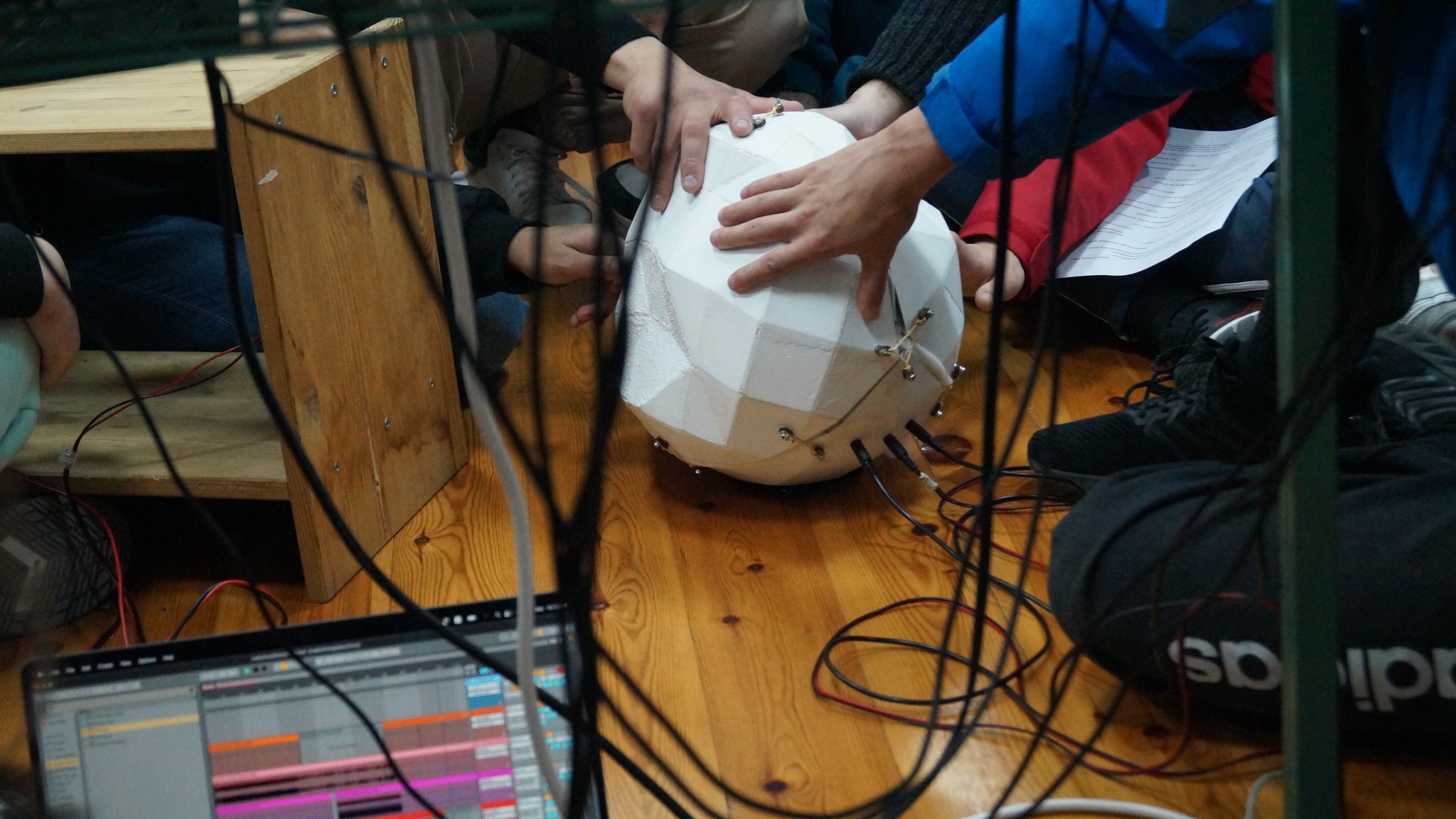
After selecting all the sounds and taking into account the specially designed radio device and its materials, the team of facilitators edited the sounds to emphasize the vibrational qualities of the final product. Sound artist George Mizithras and composer Orestis Karamanlis undertook the task of compiling the recordings into an imaginary soundscape based on the narrative sequence, incorporating processed sounds, extra-musical elements, soundscapes, and the pupils’ recorded voices. Their objective was to enhance the vibratory nature of the work, manage transitions, and integrate all described elements cohesively. Concurrently, Petros Flambouris crafted a tangible radio device in a semi-spherical, touchable, and huggable form to provide a unique vibrotactile experience. Designed to highlight vibrotactility, the Tangible Radio device offered a non-cochlear mode of listening, by bringing sonic signal to the users’ skin and palms through four embedded transducer-speakers, next to one conventional speaker that was used to accommodate a wider range of auditory diversity.
In the final workshop, the new radio device was introduced to the pupils. Divided into groups of five, they took turns to listen to their broadcast through the prototype, due to its small size. This was followed by a discussion about the device, their experiences in creating the broadcast and storytelling, and the overall value of the activity. The pupils appeared enthusiastic about the new prototype: some said it resembled a soccer ball, while others imagined it as a spaceship. Although the Deaf voice – which accompanied and explained the audio narrative – could not be fully experienced through the device’s vibrations due to its subtle vibrational characteristics, we intentionally gave it a central role. Our goal was to make the Deaf voice ‘audibly visible’ within the context of the hearing world, and for Deaf and hard of hearing individuals who use hearing aids or cochlear implants. A discussion followed.
Discussions
The first to initiate the conversation was Ibo. His main question concerned the way his own creative contribution was registered in the work: ‘How is my participation registered in the artwork? We can hear the other participants’ voices, but I did not speak.’ Having initiated the narrative, the authorship of what he was part of creating was of great concern to him, especially since he did not wish to read his part of the narrative in his own voice. On the one hand, it is a very delicate matter for us to mention names of participants, as this is a protected environment for children in which we must obtain permission to enter, work, or even photograph, record, and film. On the other hand, the project was participatory; all pupils were involved in one way or another. Even though Ibo is an adult and we are allowed to mention his name, we cannot do the same for all pupils. We compromised by mentioning first names only, but would that be sufficient for him, especially since he might not have the access to our site and full documentation?
This issue encapsulates our own artistic, theoretical and aesthetic concerns as well. As artists and project managers, we engage in processes of digital and media literacy, participatory work and workshops. Thus, we do not sign our own names either as creators of the resulting work or of any work that emerges from such creative processes. From our perspective, we offer knowledge of the process, demystify artistic production, provide literacy on the tools we use, and foster familiarity with artistic practice, potentially making every child (or adult, depending on the context) an artist. Moving beyond the antiquated demands of Romanticism or of a modernism based on ‘sublime authorship’, we challenge ‘inspiration’, ‘oestrus’, and ‘intellect’ as exclusive prerequisites of artistic creation. Instead, we seek to establish art as an ongoing practice of skill and craft, with specific tools and forms. By teaching these tools within a socially engaged context, we attempt to transform each participant into an artist, while offering media and art literacy, as well as the means for expression and creation beyond our own agendas. In this respect, we believe we are performing a service: placing our knowledge at the disposal of those who may need it.
However, as a research institution and as individual artists and academics, we have access to funding, to the process of writing proposals, and to the ability to capitalize on the results in various ways. Even if we do not sign off on our workshop-based artworks, or if we ground our practice in participatory methods, the privilege and power relations remain distinct. At the same time, there is always the danger of cultural appropriation, the charity model of disability, and tokenism. Lavishly funded projects often ask for the voluntary time of community members – precisely those in whose name the funding was obtained – ultimately offering only theoretical benefits and perhaps an empowerment that was never needed in the first place. Furthermore, there arises the question of how we can meaningfully empower a Roma Deaf adult student to capitalize on their work within such a context, something that may be crucial to their future professional life, given the circumstances of their intersectional exclusion. It is worth noting that Ibo’s question entailed the broader issues of authorship in participatory work, the ethical role of the artist, and the artist’s own posterity through their work. Even if we, as artists and researchers, forgo authorship for the sake of a participatory process, the social group involved may still wish to assert its authorship and leave its own mark.
Furthermore, as a primarily artistic and research practice, community art should be more exploratory of the issues faced by the very community it engages with, seeking to highlight matters that are genuinely relevant to its members. Usually researchers (us included) reach out to a specific community with the best intentions but also with their own questions, queries, and aspirations, sharing technological solutions and accessibility tools for problems they have not necessarily asked them to solve, or for ones that are not problems in the first place. In this particular instance, a community of individuals with hearing diversity within the disability identity – who experience hearing differently within public space, whether in relation to state structures or the broader public sphere – may feel that we appropriated their ‘voice’ when they are not able to sign their own work.
Within this context, a major issue that concerned us was how our work contributed to relevant debates of our field. Starting from our own anchorages (the rigidity of our group and the selves we carry within our field), were we able to rethink, and perhaps transcend our own presuppositions, fixations, positions and limitations? Our research questions brought us into this field with great enthusiasm. Our contact with the above-mentioned individuals and communities further reinforced that eagerness. However, a few persistent questions kept recurring among facilitators: did we impose upon our interlocutors our (hearing) ways of engaging with the soundscape? Similarly, was our training in categorical thinking itself an imposition of our understanding upon workshop participants? Is vibrotactility indeed an alternative way of perceiving sound stimuli, or does it belong to a hearing person’s imagination – here projected onto the Deaf – as the fulfilment of a desire for an alternative to audiocentric hegemony? Does our work primarily concern us, as members of the hearing majority, while holding little relevance for our Deaf interlocutors? Have we fallen into the trap of homogenizing and projecting our research questions onto our interlocutors as if they were undifferentiated members of a single community, which they are not?
These questions have been central to our thinking and to an ongoing process of reflection. It is hard to provide any answer that is detached from each specific field, but also from the context of the conversation between the hearing and the d/Deaf and hard of hearing, either as social groups or as subjectivities. In doing this project, our intention was clear: we wished to overcome or at least unsettle existing dualisms in relation to diversity and disability, a complex issue that cannot be solved either with good intentions unilaterally, or through individual programmes. We consider that the critical reflections on challenges, difficulties, research ethics and methodology that accompanied our project not only during its design and realization, but also during the post-project stage through articles such as this one, are a step in advancing scholarly dialogue as well as the field itself, and an integral part of any research of this kind.